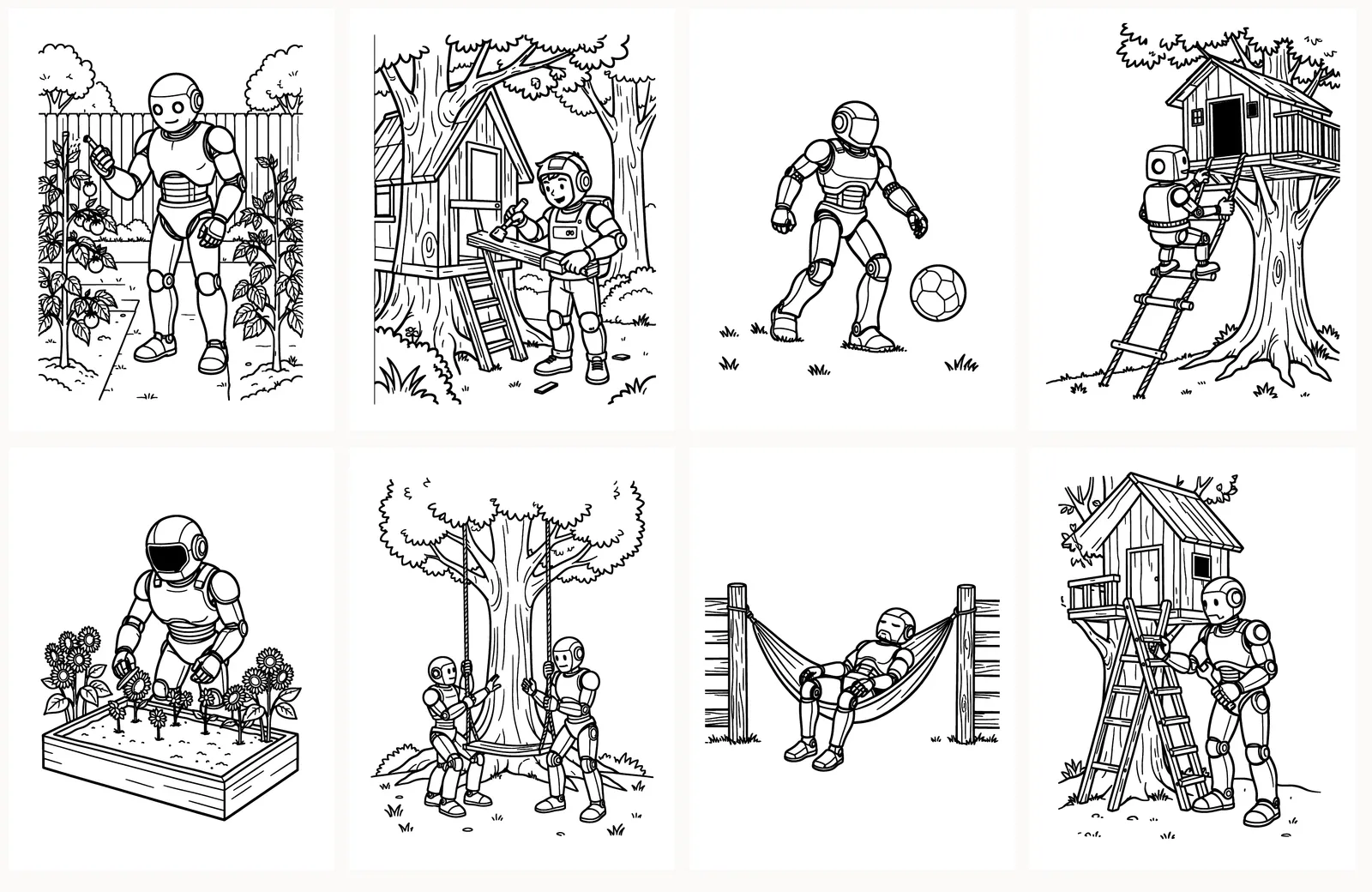
What you are looking at
Everything above comes from one real CrayonMill run: the theme typed into the wizard, the 24 topics the planner wrote around homemade robots gardening, playing, and fixing a treehouse, the pages as they left the 1-bit cleaner, and the preflight the download button waits for. Nothing here is retouched. The colored panels are AI examples made from the finished line art — the product itself is black-and-white line art.
This book was one of 18 books queued at the same moment, so its 207 minutes include time spent waiting behind up to 17 other books queued at once, not 207 minutes of continuous drawing on this book alone.
All 24 pages passed review on the first pass. None of the topic list above carries a flagged badge, and none needed a second drawing attempt. Five pages also had a decorative frame or border that the 1-bit cleaner cropped away automatically — five pages, the same as Forest Friends, which tracks with a backyard-and-treehouse setting that naturally invites a fence line or a porch railing the model can turn into a border.
Why this book is a good KDP candidate
Kids 8–11 can follow a robot through a chore or a repair rather than needing a single static pose, and the topic list above leans into that: a robot waters tomatoes, climbs a rope ladder, fixes a wobbly ladder with a wrench, paints a door, repairs a pulley system. Medium line weight carries that level of task-specific detail without collapsing into clutter, and four of the 24 pages pair the robot with a kid for a shared activity — flying a kite, roasting marshmallows, stargazing from the treehouse roof.
Why a "gardening, playing, fixing" brief needs three activity buckets
The theme names three verbs, and the topic list above visibly rotates through all three rather than favoring one: garden pages (watering, planting, raking, mowing), play pages (chasing a ball, a hammock nap, flying a kite), and treehouse-repair pages (a wobbly ladder, a squeaky pulley, painting the door). No single bucket runs more than a handful of pages in a row, which is what keeps a chore-based theme from reading as repetitive — a real risk when the "character" doing every task is the same robot with no changing expression to signal variety the way an animal cast can.
Sources
Last verified 2026-09-05. Updated 2026-09-05.