What you are looking at
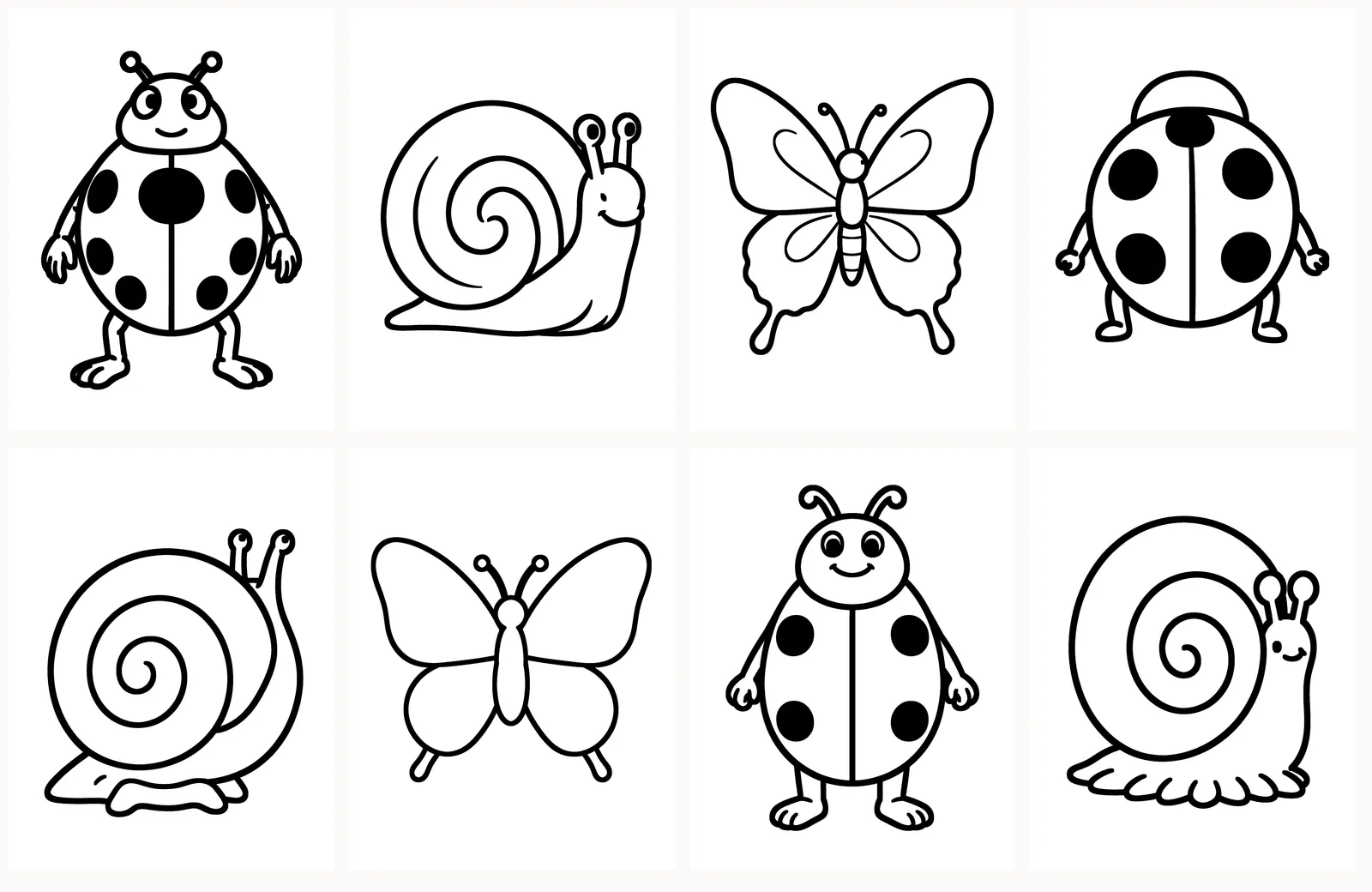
Everything above comes from one real CrayonMill run: the audience, theme, and page count typed into the wizard; the 24 topics the planner wrote from three subjects — one ladybug, one snail, one butterfly — repeated across giant, single-subject pages; the pages as they left the 1-bit cleaner; and the preflight the download button waits for. Nothing here is retouched. The colored panels are AI examples made from the finished line art so a page can be pictured filled in — the product itself is black-and-white line art.
This book was one of 18 books queued at the same moment, so its 153 minutes include time spent waiting behind up to 17 other books queued at once, not 153 minutes of continuous drawing on this book alone.
All 24 pages passed review on the first pass. None of the topic list above carries a flagged badge, and none needed a second drawing attempt — the whole set went through the cleaner and the reviewer once each.
Why this book is a good KDP candidate
Toddlers grip a crayon with a fist, not a pencil grip, so extra-bold lines and one giant subject per page are what make a page usable at that age: a ladybug, a snail, or a butterfly fills nearly the whole page, drawn with no small parts to color in and no background clutter to color around. The topic list above never asks a two-year-old to identify more than one thing per page, and every subject count in the data is exactly one.
Why three garden bugs are enough to fill 24 pages
The theme is only three subjects, and the topic list above shows how the planner stretches that into 24 pages without repeating a pose: a ladybug resting on a leaf, one with a wide smile, one with tiny round wings; a snail curled in its shell, one with a swirly shell pattern, one with a smooth curved body; a butterfly with fat round wings, one with curved big eyes, one with a plump little body. Every page keeps the same giant-subject, plain-background composition a toddler book needs, and the variation lives entirely in the pose and expression, not the setting — which is what lets a three-subject theme carry a full 24-page book without a publisher ever needing a fourth idea.
Sources
Last verified 2026-09-05. Updated 2026-09-05.